
Lilith: The patron of rebellion and women
- spoiled bean dip
- Sep 29, 2025
- 6 min read


Amongst the blossoming pantheon that is new age spiritualism/ neo-paganism there stands a number of beings people first imagine when discuessing about pagan deities. Common ones that come to mind are Hekate, Isis, Thor, or even the Green Man- but one that has been rising in popularity within the past decade originated not as a pagan deity at all, but rather from superstitions and charms from the ancient middle east. This being in question is Lilith.
Her-story: Origins and development
Within pop culture and in christianity her name alone sparks a familiar, yet obscure image of a being depicted as either Adam's first wife, a seductive demon woman, or even as the queen of Hell. Traces of the name Lilith come from the languages of ancient Mesopotamia as far back as 4,000 years ago, where it spawned from the Sumerian word "lil" meaning spirit, and the Akkadian word "lilitu" which referred to a class of night spirits. This categorization remained for most of her history as she wasn't a fully fleshed out being just yet, with these early and later Jewish traditions influencing Lilith in modern depictions much later on.
Often times these beings were seen as the source of some diseases or physical aliments, with ancient Mesopotamian medical tablets describing male lilu attacking women and female lilitu attacking men respectively. Upon being afflicted by either spirit symptoms can range from fevers, internal pain, or seizures so bad it results in your eyes rolling back into your skull and blood erupting from your nose! To prevent this many people resorted to the creation of charms to ward off these beings with some even depicting a mate of the opposite sex for them. This was made because it was believed that these beings where the ghosts of unhappy young men and women who died prematurely and thus where fated to wander the land unfulfilled; with a greater focus shifted towards young women who died as virgins or before giving birth. So by giving them a mate within these amulets it redirected their attention from the living, allowing both the wearer and restless soul to live in peace.
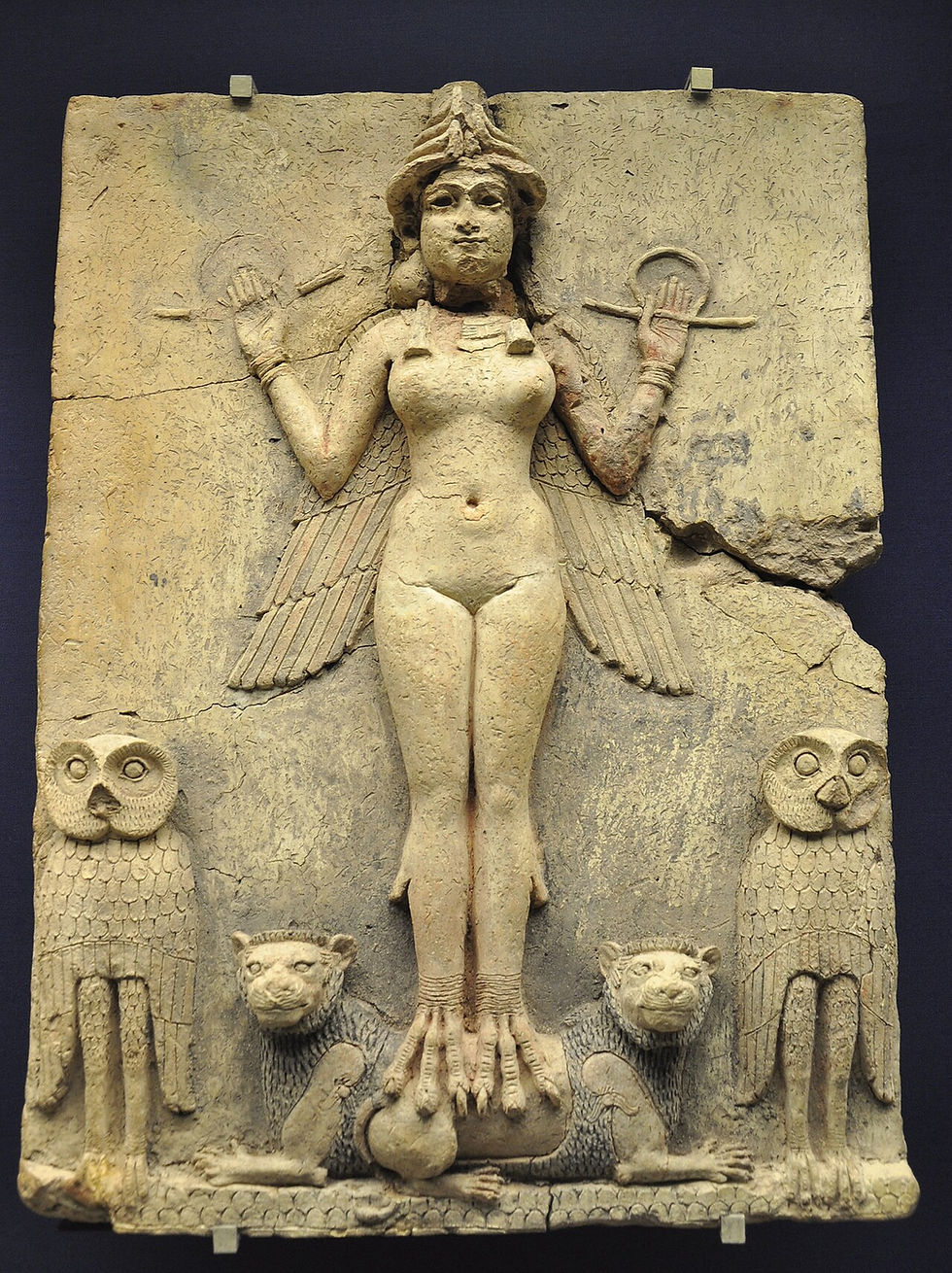
Another influence comes from the epic of Gilgamesh where in one story the Goddess Inanna plants a willow tree for the purpose of building her a throne and bed. She lets the tree grow for ten years and upon returning she finds three creatures taking residence in the willow- a snake at its roots, a zu bird in its branches, and lastly a Lil or Lilake (the proper translation is disputed). But a widely accepted idea is that Lilith was inspired or at least connected to the ancient Mesopotamian demon goddess Lamashtu, a figure feared for her ability to "-utterly smash the tiny ones" as one ancient Assyrian tablet describes.
Jewish influences and literature:
Much later in Jewish mythology we begin to see early references to a being directly manifested from these early concerns of child mortality and sudden illness. One of the most notable and single examples of there being a direct reference to Lilith comes from the book of Isaiah. For some context the God of Israel seeks vengeance on the local kingdom of Edom and its nobility, turning it into a wasteland where it states:
Wildcats shall meet with hyenas; goat-demons shall call to each other; there also Lilith shall repose and find a place to rest.
-Isaiah 34:14 from the New Revised Standard Version Updated Edition
This is the only mention we ever get from this character, and because her name is so obscure to a non-jewish audience many scribes over the centuries found it easier to replace the original name with a more familiar one like in the King James Bible where she is instead called a screech owl. But beyond this the only context we get is that she's a wild demoness of the desert, hanging out with the local wildlife within the ruins of abandoned areas. During the early centuries of Rabbinic Judaism she was conceptualized as a female demon with wings that came to its victims as they slept, with one Rabbi even suggesting a ban on sleeping alone at night as they warned those who did will be seized by Lilith.
Now I may hear one of you mentioning how she was originally Adam's first wife but this version only came centuries later when Jewish Rabbis tried to explain the bizarre double creation stories in Genesis. If you're familiar with the Bible you're probably aware of the story of Yahweh creating the universe and world within seven days, with Adam and Eve being some of his last creations. But if you read Genesis you'll notice that he created humans twice- with the first time mentioning him creating man and woman in his image, and in the second time him creating Adam first then Eve from his rib. Some Jewish scholars must have recognized these two accounts and in order to harmonize both creation myths they describe them as the creation of two different women, with Lilith being created first and then Eve. A notable example of this can be seen The Alphabet of Ben Sira, an anonymous text written between the 8th century up until the year 1000 CE. The text expands on the garden of Eden story where it explains how Adam and Lilith where created initially after God, and when they decide to "do it" Adam insists he shall be the one who goes on top. Lilith however refused believing since they were both made in the image of God, thus fundamentally equal, that she should be on top instead. Adam disagrees and so Lilith calls upon the tetragrammaton (the holy four lettered name of God) and flies away. Three angels are sent to retrieve her but she remains stubborn and firm in her desicion. After threatening to drown her in the red sea she then cries "Leave me!...I was created only to cause sickness to infants!" A creative mythical explanation for the continued practice of anti-lilitu (now Lilith) amulets to ward off her clutches during childbirth and from infants.
Her relevancy remained largely in Jewish occultism and mysticism like in Kabbalah, where in some versions she was even paired with a being meant to portray an evil version of Adam known as Samael. In this narrative he is seen as the original man created by God before Adam and Lilith's primordial consort, with the pair creating an unholy parallel towards Adam and Eve.
Modern rebranding:
It wasn't until far later on during the 20th century where we see a new major development in her character from a malevent being into a strong symbol of the 2nd wave feminist movement. In 1976 a group of Jewish women got together and published a magazine aimed towards amplifying Jewish voices and being a change maker for these communities, and the name they chose for this mission was Lilith.
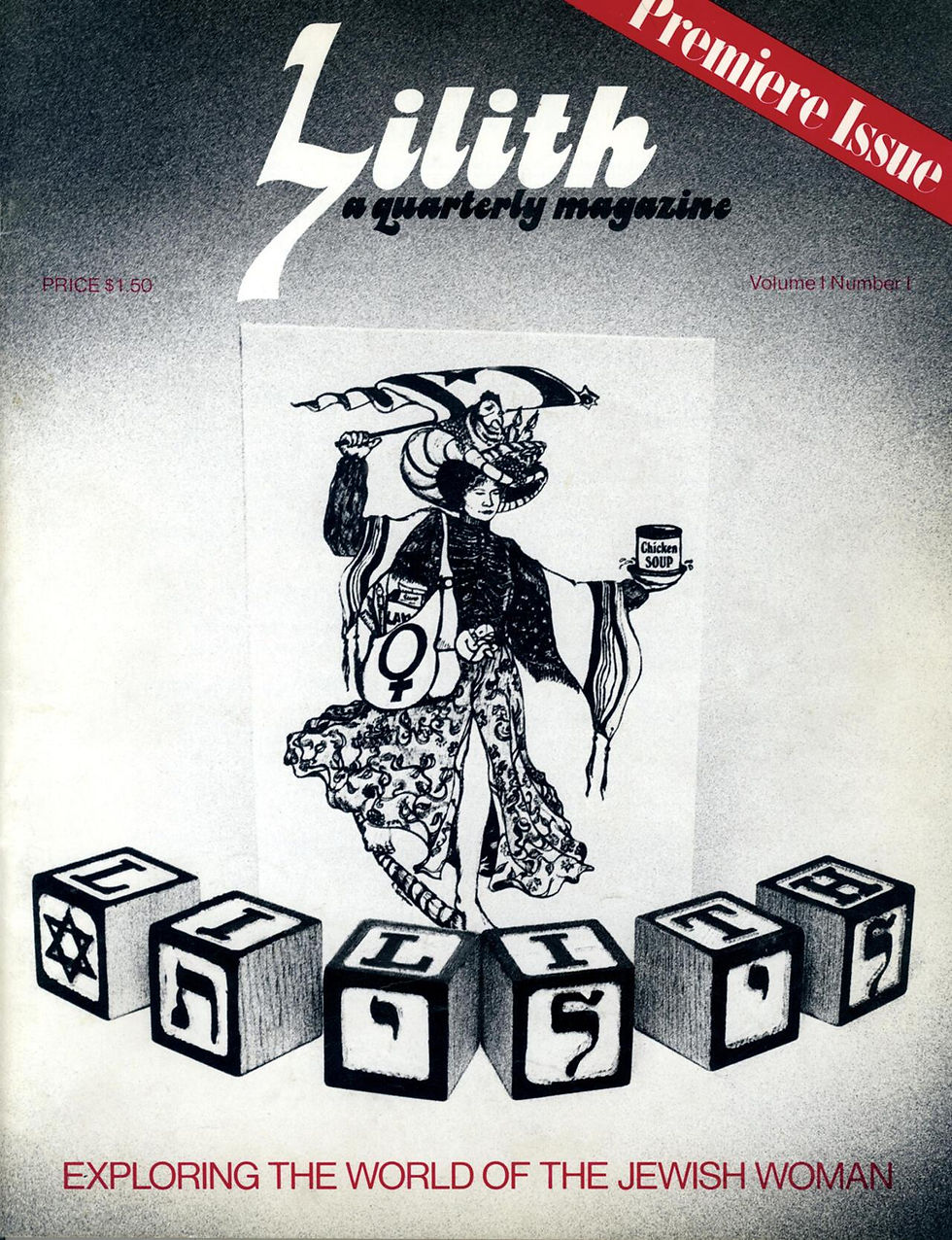
In this first issue they address the Lilith question by asking the audience if this wild-haired vengeful witch should be a proper model for Jewish women, with the answer they give being yes! By reinterpreting The Alphabet of Ben Sira they see her actions in the story as positive qualities instead of negative ones:
Not only does Lilith immediately recognize tyranny for what it is, but she immediately resists it, too...Lilith is a powerful female. She radiates strength, assertiveness; she refuses to cooperate in her own victimization.
-Lilith Magazine issue #1, 1976
It wasn't too long after that this new rebranded Lilith would escape Jewish communities and flourish in new mainstream pagan movements, where she would be discovered and continuously developed on as she provides for a new generation. It is here that Lilith not only proves herself to be an enduring figure, but also a highly malleable one- allowing her to character to morph into different roles for those who wish to conjure her...

Some modern symbols and associations of Lilith:
Colors: Red and black
Beasts: Jackals, hyenas, owls, wild cats, black cats, black dogs, ostriches, snakes, dragons, spiders, and unicorns (because why not!)
Symbols: Desolate or abandoned places, hand shaped symbols (like the hamsa), forests, crossroads, seacoasts, the desert, and her seal as shown above.
Plants & herbs: Really any herb or flower will do, but she does destain rue.
Offerings: Doll babies or dolls of beautiful women, herbal tea, a wild space outdoors for her to dwell in, images of her sacred animals, standing up against injustice, and embracing your rebellious side.
Here is the link to read the entire article of the Lilith question:
Sources:
The encyclopedia of spirits by Judika Illes


Comments